
Pennsylvania Traffic Ticket Records
Pennsylvania traffic ticket records are public documents that capture the full life of a traffic citation, from the moment an officer writes the ticket through any court proceedings that follow. These traffic court records are maintained by the Magisterial District Courts in most of the state's 67 counties, as well as by the Municipal Court in Philadelphia and the Pittsburgh Municipal Court. The Pennsylvania Unified Judicial System portal gives the public free online access to traffic violation records and docket sheets without requiring a trip to the courthouse.
Pennsylvania Traffic Ticket Records Quick Facts
How to Search Pennsylvania Traffic Ticket Records Online
The fastest way to access Pennsylvania traffic ticket records is through the Unified Judicial System Web Portal at ujsportal.pacourts.us. This free public tool gives you access to docket sheets from appellate courts, Courts of Common Pleas, and Magisterial District Courts across the state. A docket sheet is a running record of all court actions and filings in a case. It shows the name of the court, the presiding judge, documents filed, hearing dates, and the current status of the case. Anyone can search without creating an account.
You can search Pennsylvania traffic citations by several methods. These include case number, participant name, organization name, offense tracking number, police incident number, or state ID number. The portal returns matching docket sheets that you can view right away. For people who check traffic violation records often, PennDOT and the court system offer a free mobile app called PAeDocket. Download it from any major app store by searching the name. It provides the same quick search of court cases and dockets from your phone.
The UJS portal also links to PAePay, the online payment system for fines and court costs. PAePay accepts payments to Pennsylvania Common Pleas and Magisterial District courts statewide. Not all county courts participate in electronic payment, so check the citation for local instructions if PAePay does not show your case.
The portal covers docket sheets for magisterial district court cases going back many years. Older traffic court records may only be available in person at the courthouse where the case was heard. Contact the Magisterial District Court or the county Clerk of Courts for older Pennsylvania traffic violation records not found through the online search.
The Pennsylvania Judiciary Web Portal provides public access to court docket sheets and PAePay online.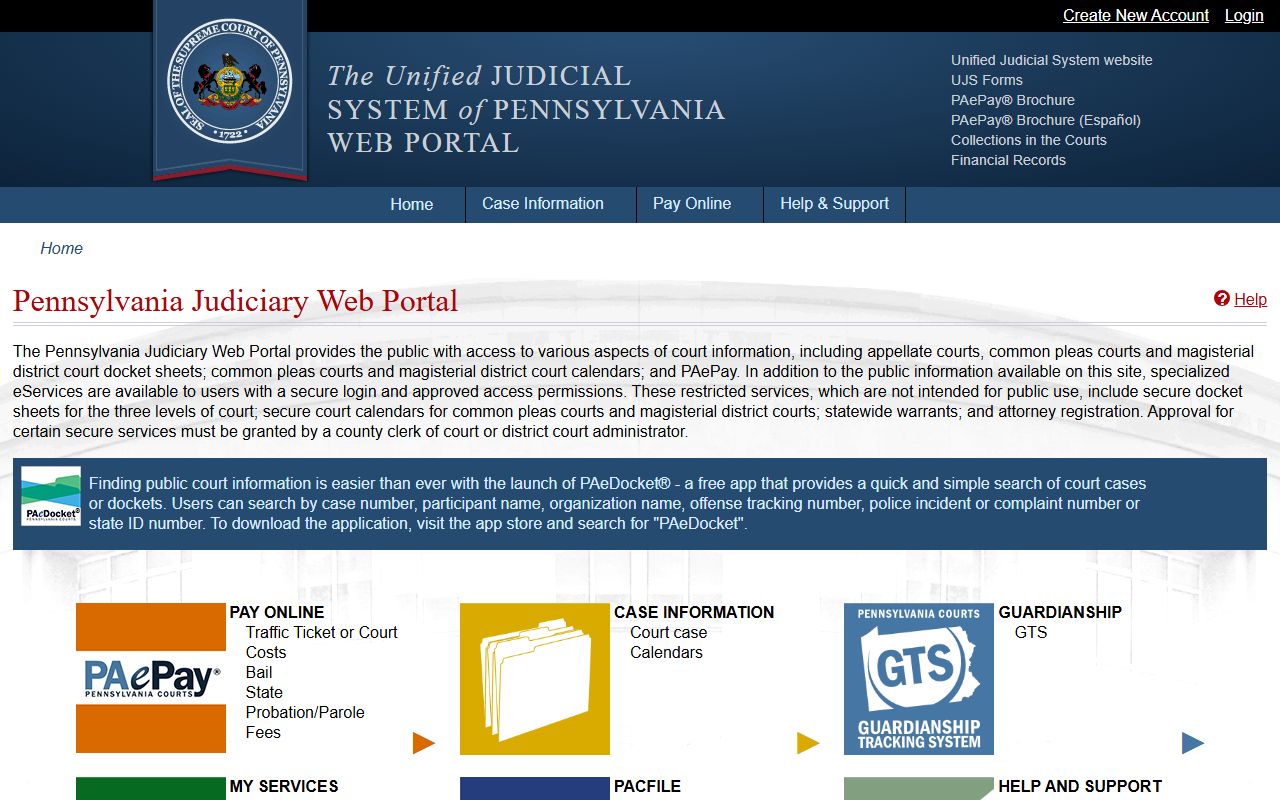
The UJS portal is the primary starting point for anyone looking up Pennsylvania traffic citations or court records online.
PAePay on the UJS portal allows online payment of traffic fines to Pennsylvania courts statewide.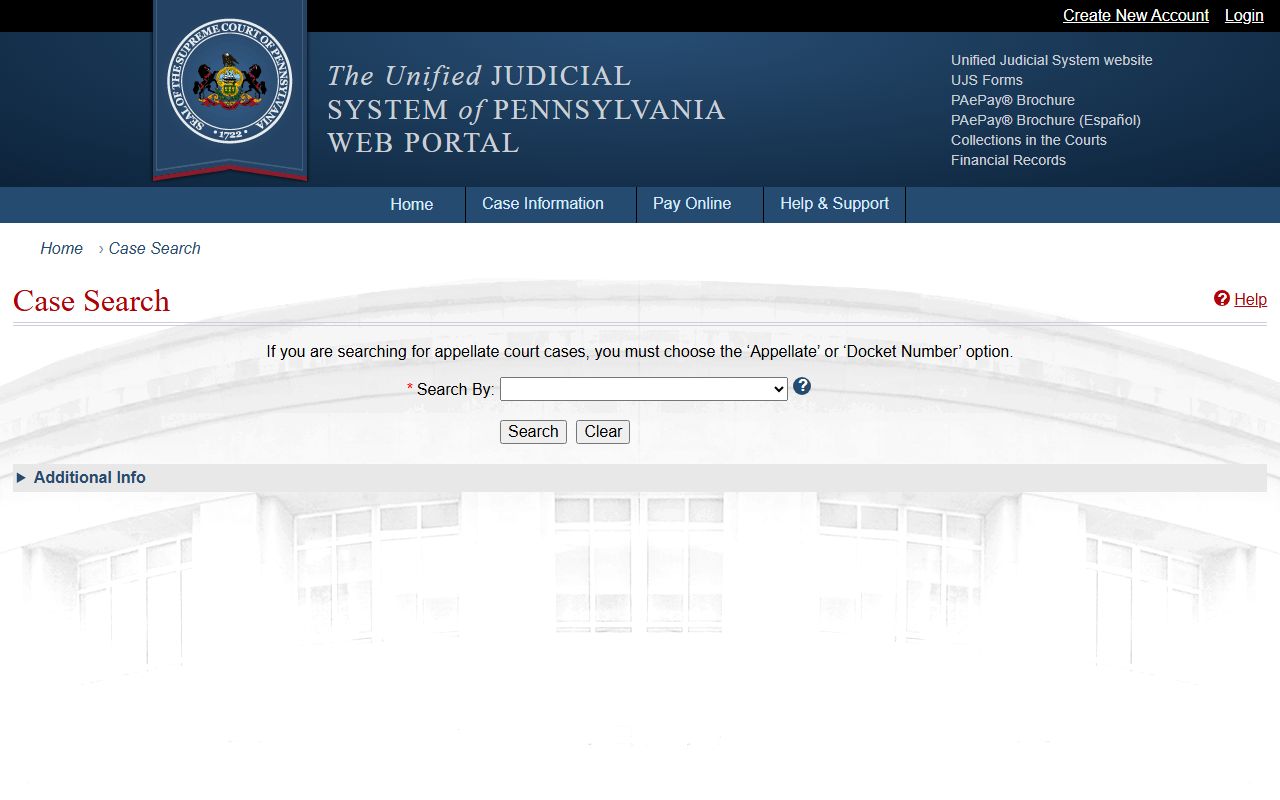
Drivers can pay traffic fines, court costs, and restitution directly through PAePay without visiting a courthouse.
Note: Recent entries may not appear immediately on docket sheets after a hearing or filing takes place.
What Pennsylvania Traffic Court Records Contain
Pennsylvania traffic court records are specialized documents that detail the judicial process surrounding a specific traffic violation. Each record focuses on a single citation and the proceedings that followed. The record covers the original violation, court proceedings, evidence presented, sworn statements, and any judgment handed down by the magistrate or judge. Traffic court records are separate from general criminal records and contain only information tied to the traffic case itself.
A typical Pennsylvania traffic ticket record includes the nature and details of the violation, the date and location of the offense, the name of the citing officer, court hearing dates, pleas entered, fines assessed, and the final disposition of the case. Records may also note whether the driver appeared in court, whether a payment plan was established, and any license points assessed as a result of the conviction. These documents are generated and maintained by the court administrator of the Magisterial District Court in the judicial district where the offense occurred.
The Administrative Office of Pennsylvania Courts oversees record-keeping for all Pennsylvania court systems.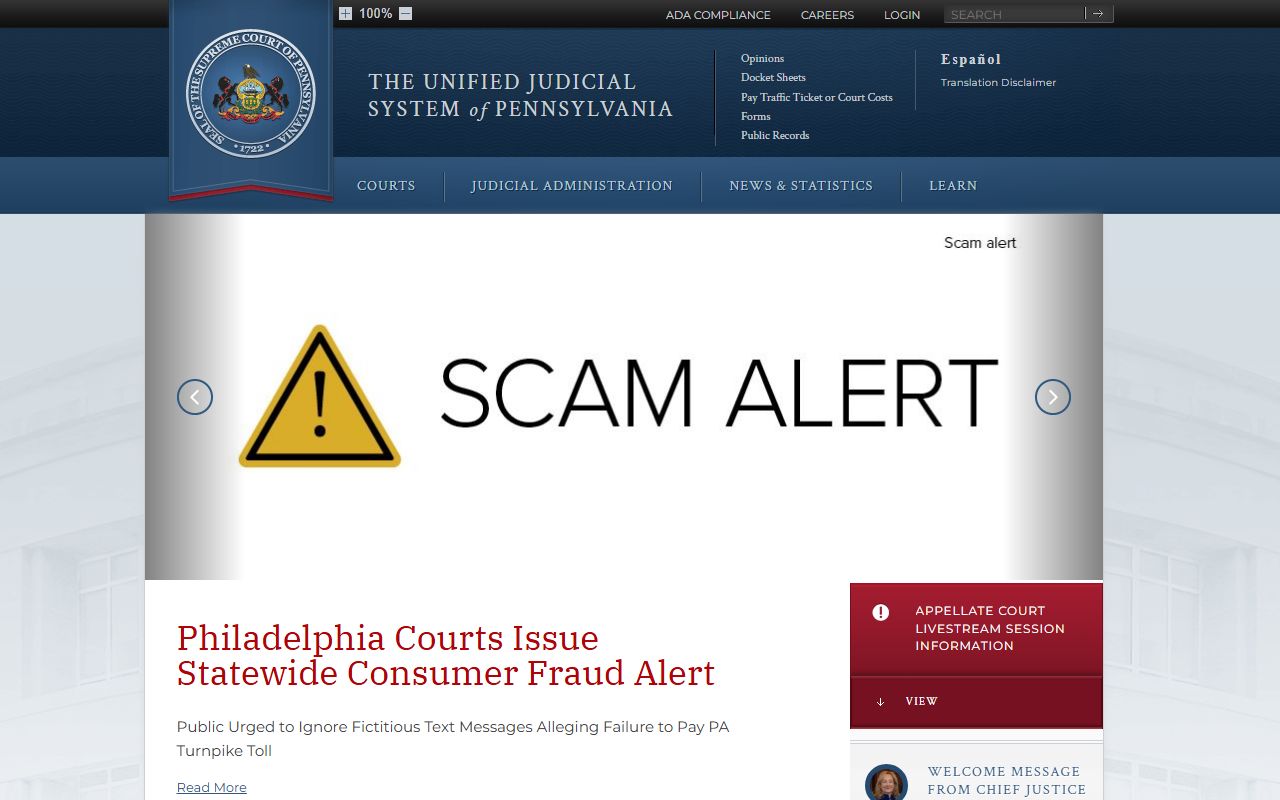
The AOPC sets the standards for how courts across Pennsylvania store and share traffic court records and docket sheets.
Documents in a traffic court file cannot be downloaded from the UJS portal. The portal shows the docket sheet summary. To get copies of actual filed documents, you must contact the Prothonotary or Clerk of Courts in the county where the case was heard. Some counties accept mail requests; others require an in-person visit.
Note: The docket sheet lists all documents filed in a case but only summarizes their content.
Pennsylvania Magisterial District Courts and Traffic Cases
Traffic-related cases in Pennsylvania fall under the jurisdiction of the Magisterial District Courts. These local courts handle the initial processing of traffic citations throughout the state. Each judicial district has its own Magisterial District Judge who presides over traffic hearings, accepts pleas, and sets fines. The court administrator in each district manages the generation and distribution of traffic court records for that area. There are more than 500 Magisterial District Court offices spread across all 67 counties in Pennsylvania.
When a driver receives a Pennsylvania traffic citation, the ticket directs them to the specific Magisterial District Court for their violation. The driver must respond within 10 days. Failing to respond can result in a default judgment, additional fines, or a license suspension. The Magisterial District Court keeps the official traffic ticket record for every citation issued in its district.
The Pennsylvania Supreme Court is the highest court in the state and the final authority over all judicial proceedings.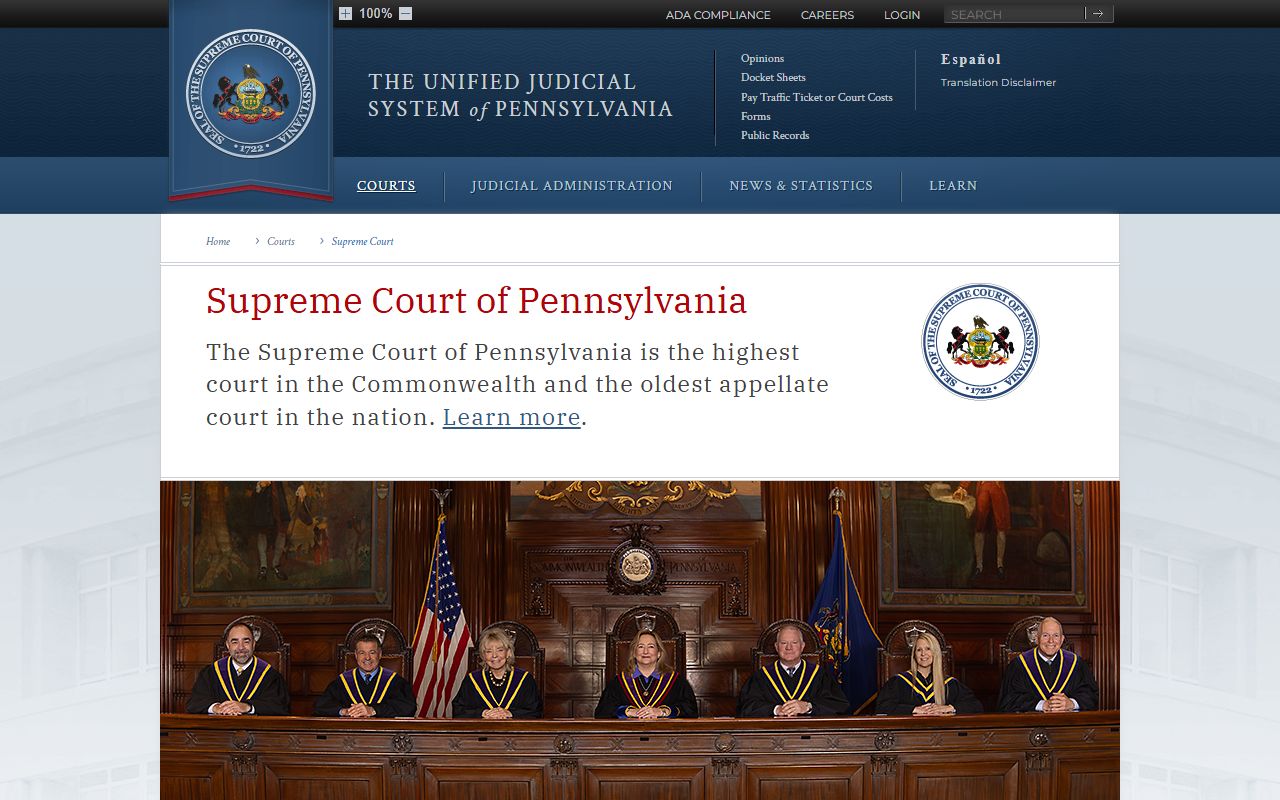
While the Supreme Court rarely touches traffic matters directly, it sets the rules and policies that govern how lower courts handle traffic citations and records.
The Pennsylvania Superior Court is one of two intermediate appellate courts that may review traffic conviction appeals.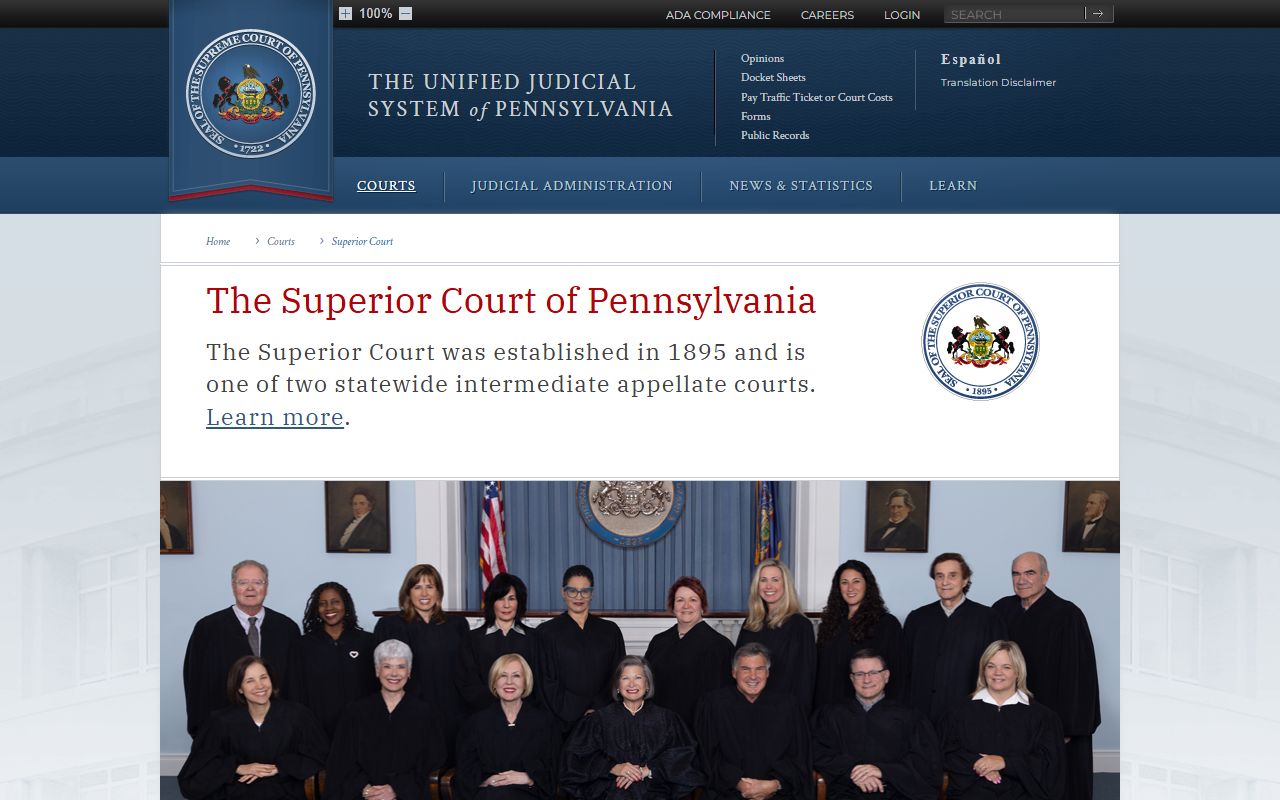
Drivers who appeal a Magisterial District Court decision may have their case reviewed by the Superior Court as part of the Pennsylvania appellate process.
The Pennsylvania Commonwealth Court serves as another intermediate appellate court in the Pennsylvania judicial system.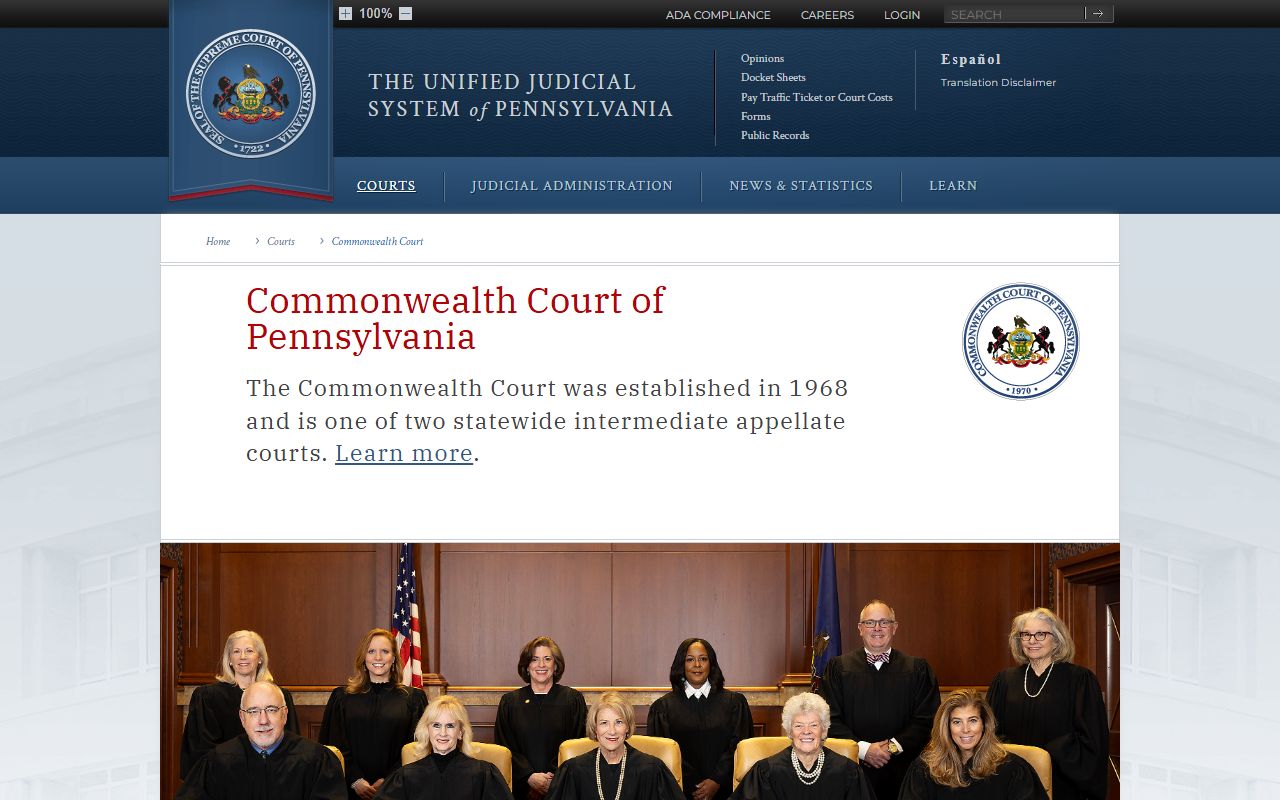
The Commonwealth Court primarily handles cases involving state agencies, which can include appeals tied to PennDOT licensing actions that stem from traffic violations.
Pennsylvania Vehicle Code and Types of Traffic Violations
Pennsylvania traffic violations are governed by the Pennsylvania Vehicle Code. Violations fall into two broad groups: moving violations and non-moving violations. Moving violations occur while the vehicle is in motion and include speeding, reckless driving, running red lights, improper passing, and failure to yield. Non-moving violations cover issues like parking offenses and vehicle paperwork problems such as expired registration or missing inspection stickers.
Within moving violations, some offenses are classified as criminal traffic violations. Criminal violations include DUIs, DWIs, criminal speeding, and aggravated DUI charges, which may be treated as misdemeanors or felonies. Vehicular homicide is the most serious criminal traffic charge in Pennsylvania and is treated as a felony. Non-criminal violations are primarily non-moving offenses, though some moving violations such as minor speeding are civil in nature. Each type of violation generates a different kind of Pennsylvania traffic ticket record depending on how the case is processed.
Fines and penalties vary widely depending on the type of violation and the court handling the case. A simple speeding ticket may result in a modest fine and a few license points. A DUI conviction can mean heavy fines, license suspension, mandatory treatment programs, and a criminal record that shows up on traffic court records for years.
Pennsylvania Traffic Violation Point System and Driving Records
Pennsylvania uses a point system to track traffic violations on each driver's record. Points accumulate on a driving record when a driver is convicted of a moving violation. Reaching six or more points triggers action by PennDOT. On the first offense at six or more points, the driver must pass a special written exam within 30 days. Failing to take and pass the exam results in an indefinite license suspension.
Repeat offenders face stricter consequences. A second time reaching six or more points requires a mandatory personal appearance before PennDOT. A third time triggers additional restrictions. Drivers who accumulate 11 or more points face a mandatory license suspension of at least five days per point above ten. Points reduce over time for drivers who maintain a clean record, but new violations reset the clock and can add more points quickly.
PennDOT's Bureau of Driver Licensing maintains all driving records for the state. A standard driver history record includes licensing status, traffic violations, convictions, accident reports, suspensions, revocations, and restoration requirements. PennDOT offers two types of driving records: a 3-year record and a 10-year record. The standard fee is $5.00 for a regular record and $10.00 for a certified version needed for court or legal proceedings. To request a driving record by mail, use Form DL-503 and send it to PennDOT Bureau of Driver Licensing, Driver Record Services, P.O. Box 69003, Harrisburg, PA 17106-9003.
PennDOT oversees highway programs, vehicle registrations, driver licensing, and traffic enforcement records statewide.
PennDOT administers more than 10.2 million driver licenses and IDs across Pennsylvania and maintains the official driver history records linked to traffic violations.
PennDOT Driver and Vehicle Services handles license renewals, driving records, and other driver-related services online.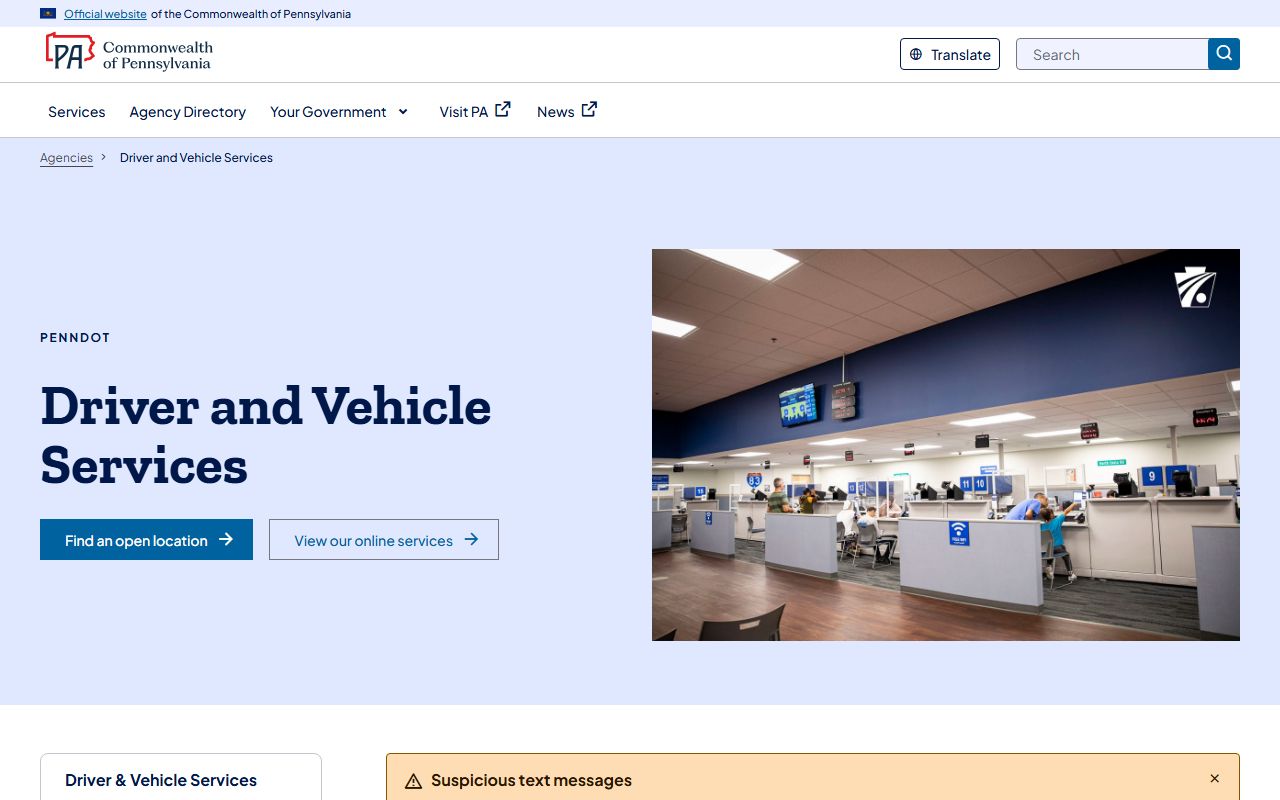
Drivers can renew licenses, order driving records, and schedule road tests through the PennDOT Driver and Vehicle Services online portal.
Note: Certified driving records carry an official PennDOT seal and are required for most court proceedings related to Pennsylvania traffic violations.
How to Respond to a Pennsylvania Traffic Ticket
Pennsylvania law gives drivers 10 days from the date of issuance to respond to a traffic citation. Missing this deadline can lead to a default judgment entered against you. A late fee of $25.00 applies if no response is received within 10 days in many districts. A license suspension can also follow if you ignore the ticket entirely.
You have several options when responding to a Pennsylvania traffic ticket. First, you can pay the fine, which is treated as an admission of guilt and closes the case. Second, you can plead guilty and accept the fine and any points. Third, you can contest the ticket by pleading not guilty and requesting a hearing before the Magisterial District Judge. You can respond by mail, online through the UJS portal where available, or by phone as directed by the citation. If you believe the ticket was issued in error, submitting a not-guilty plea within 10 days is the required first step to challenge it.
At a contested hearing, you may present evidence and question the citing officer. The Magisterial District Judge reviews both sides and delivers a decision. If you lose at the magistrate level, you may appeal to the Court of Common Pleas in that county. The appeal must be filed within 30 days of the magistrate's decision.
Paying Pennsylvania Traffic Fines and Court Costs Online
Pennsylvania offers online payment for traffic fines through PAePay, the payment module built into the UJS Portal. PAePay allows drivers to pay fines, court costs, and restitution to Common Pleas Courts and Magisterial District Courts across the state. To use PAePay, visit ujsportal.pacourts.us and search for your case. Once you locate the docket, follow the payment link to complete your transaction. Keep the confirmation number as proof of payment.
Not every Pennsylvania court accepts electronic payments through PAePay. Some counties require payment in person or by mail. The citation itself will list the specific court and any local payment instructions. If PAePay does not show your case, contact the Magisterial District Court listed on your citation directly.
Payment plans may be available through the court for drivers who cannot pay the full amount at once. Contact the court office listed on your citation to ask about payment arrangements. Philadelphia Municipal Court Traffic Division, for example, offers payment plans to eligible defendants.
Note: Paying a traffic fine is generally treated as an admission of guilt in Pennsylvania, and points may still be added to your driving record.
Philadelphia Traffic Ticket Records and Court Information
Philadelphia handles traffic citations differently than the rest of Pennsylvania. The Traffic Division of the Philadelphia Municipal Court adjudicates violations of the Pennsylvania Vehicle Code that occur within Philadelphia. Established under Act 17 of 2013, the Traffic Division replaced the former Philadelphia Traffic Court and took over its jurisdiction. The Administrative Judge of the Traffic Division is the Honorable Joffie C. Pittman, III, who was appointed to the role in January 2022. The division is open Monday through Friday from 8:30 a.m. to 5:00 p.m.
Philadelphia traffic citations are not handled by the typical Magisterial District Court system. Drivers who receive a Philadelphia traffic ticket must follow the instructions on the citation, which point to the Traffic Division for payment or contesting. Online payment is available for Philadelphia traffic citations through the ePay system at courts.phila.gov/traffic. Payment plans are available for those who qualify. A late fee of $25.00 applies if there is no response within 10 days. The Traffic Division does not handle parking violations; those go to the Philadelphia Parking Authority at 215-683-9600.
The Philadelphia Courts website provides case search, ePay for traffic citations, and calendar access for the First Judicial District.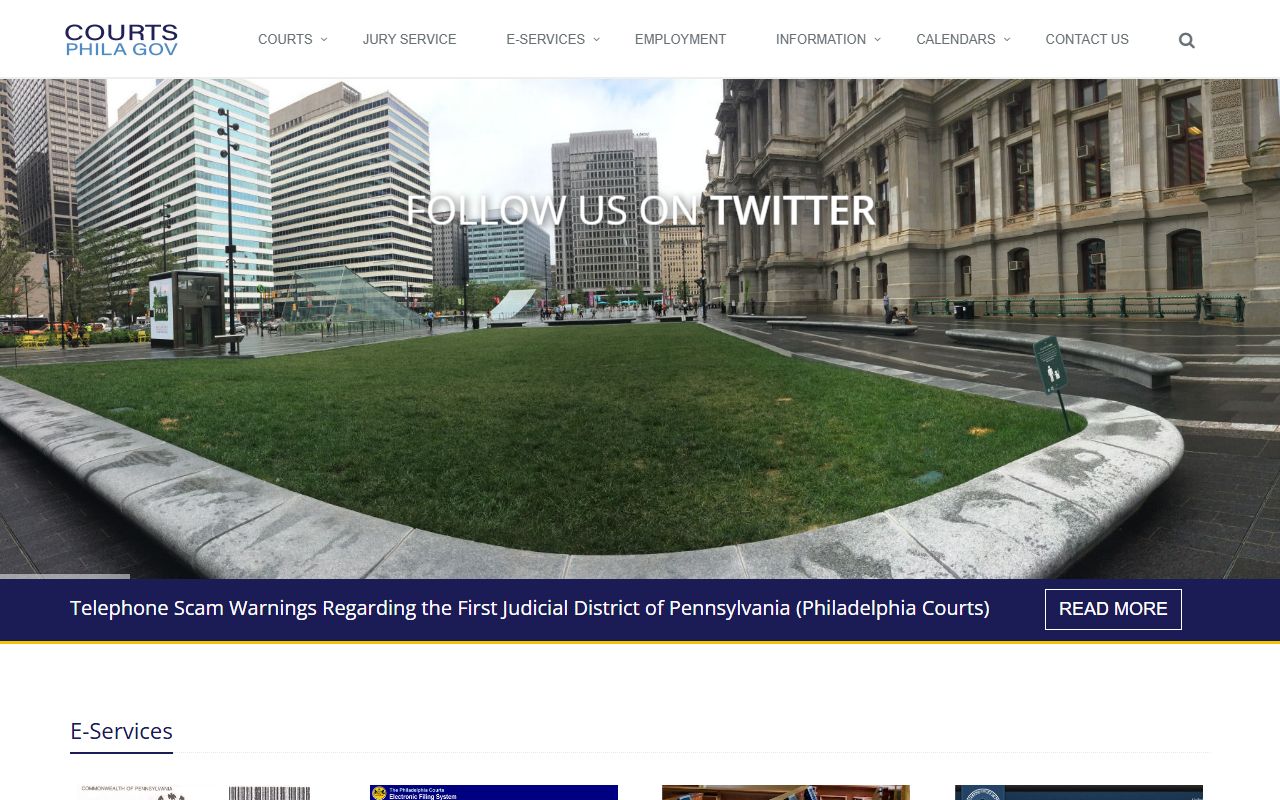
Philadelphia Courts serves as the central hub for traffic citation records and court services in Pennsylvania's most populous city.
The Philadelphia Municipal Court Traffic Division adjudicates all Pennsylvania Vehicle Code violations that occur in Philadelphia.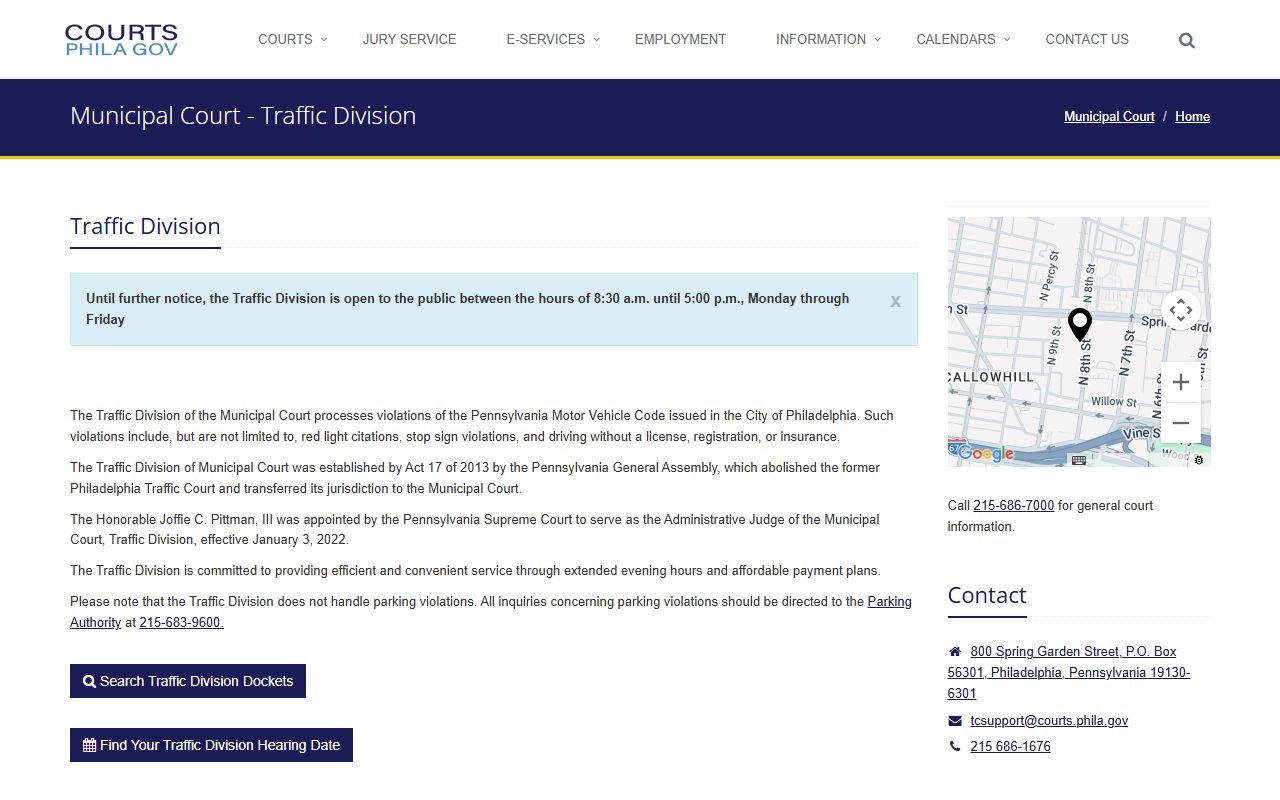
The Traffic Division replaced the former Philadelphia Traffic Court in 2013 and now serves as the sole venue for contesting or paying Philadelphia traffic citations.
Allegheny County Traffic Ticket Records and Pittsburgh Court
Allegheny County is home to the Fifth Judicial District of Pennsylvania, which is centered in downtown Pittsburgh. The Court of Common Pleas in Allegheny County handles criminal, civil, family, and orphans' court matters, and it serves as the appellate court for Magisterial District Court decisions within the county. Traffic ticket records originating in Allegheny County that are appealed beyond the magistrate level come before the Court of Common Pleas in Pittsburgh.
Traffic citations issued in Pittsburgh and throughout Allegheny County are initially processed by the local Magisterial District Courts. Drivers can search Allegheny County traffic court records through the UJS Portal using the same case search tools available for the rest of Pennsylvania. The Allegheny County Courts website at alleghenycourts.us provides additional information on court operations, schedules, and services for residents of the Pittsburgh area.
Allegheny County Courts serve the Fifth Judicial District of Pennsylvania, including traffic cases originating in Pittsburgh.
The Court of Common Pleas in Pittsburgh handles appeals and more serious traffic matters from across Allegheny County.
The Allegheny County Jury Management office summons approximately 30,000 citizens annually for service in the Fifth Judicial District.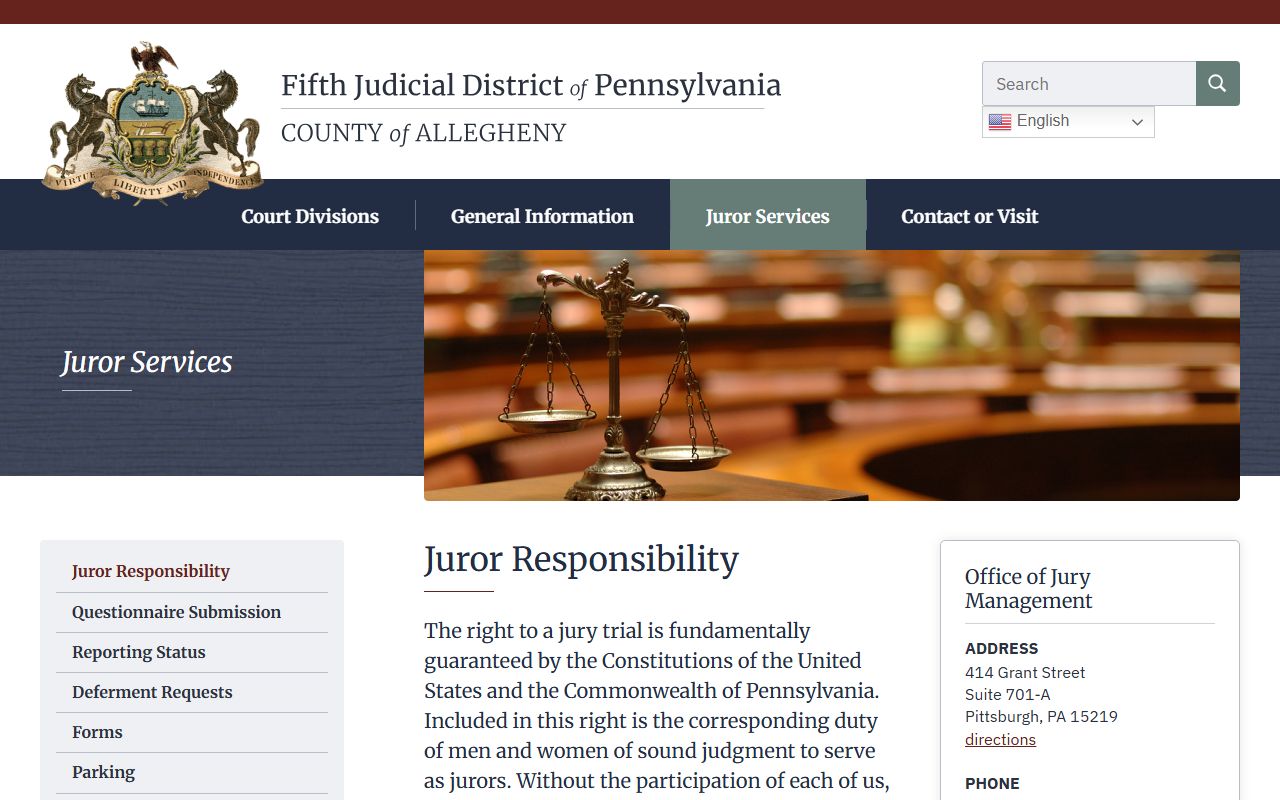
Jury services are part of the broader court administration that supports traffic and other civil and criminal proceedings in Allegheny County.
Note: Pittsburgh traffic violations that carry criminal charges such as DUI may be processed through the Allegheny County Court of Common Pleas rather than a Magisterial District Court.
Browse Pennsylvania Traffic Ticket Records by County
Each county in Pennsylvania processes traffic citations through its Magisterial District Courts. Select a county below to find local resources for traffic ticket records in that area.
Traffic Ticket Records in Major Pennsylvania Cities
Major cities in Pennsylvania handle traffic citations through their county court systems. Select a city below to find traffic ticket records resources in that area.